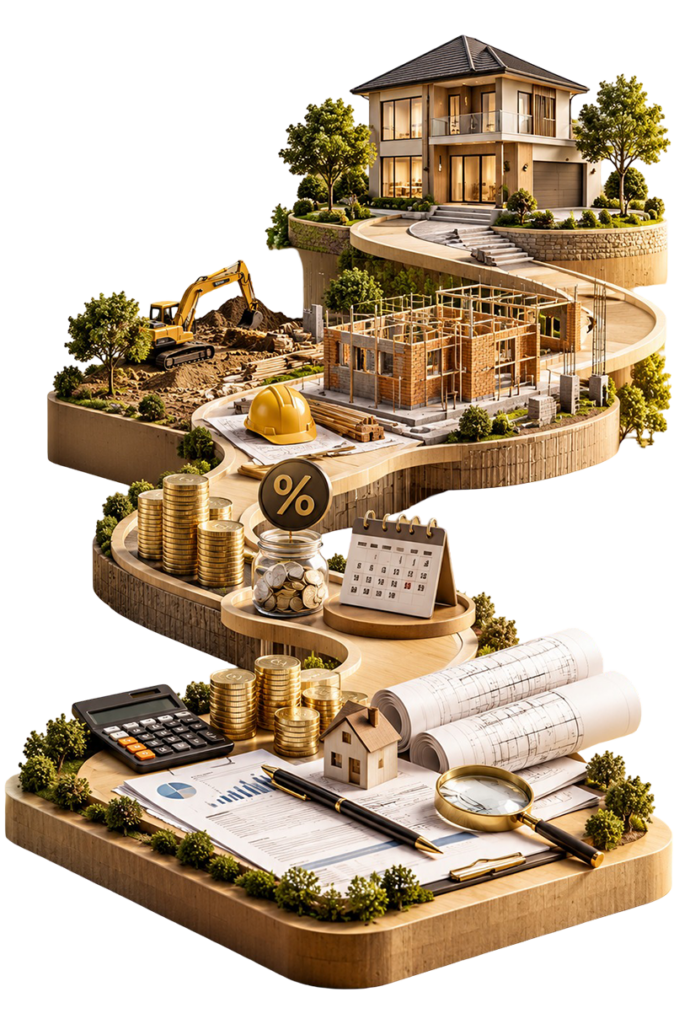







Finance your build with a clear plan from the start.

Building a new home involves more than getting a loan approved. Your lender, building contract, progress-payment schedule and loan structure all need to work together from the first drawdown through to completion.

MortgageDesign helps you understand the lending requirements, compare suitable options and structure the finance around your build, budget and longer-term plans. 

STRATEGIC MORTGAGE ADVICE
Get An Clear View

Get the finance clear before you commit.

A New Build involves more conditions and moving parts than buying an existing home. Understanding your finance early helps you know what you can commit to, with greater confidence.

Home loans

Your deposit, equity and overall borrowing position

Property investment

The land and build cost, including what is and is not included in the contract

Refinancing & refixing

Your builder, the type of building contract and payment schedule

New builds

Lender requirements for valuations, consents and insurance

Insurance

Any existing mortgage, rent or other commitments during the build

Calculators

A sensible allowance for variations or unexpected costs

finance clear before you commit.

Get the finance clear before you commit.

A New Build involves more conditions and moving parts than buying an existing home. Understanding your finance early helps you know what you can commit to, with greater confidence.  

A new build review may consider:

STRATEGIC MORTGAGE ADVICE

Your deposit, equity and overall borrowing position

STRATEGIC MORTGAGE ADVICE

The land and build cost, including what is and is not included in the contract

STRATEGIC MORTGAGE ADVICE

Your builder, the type of building contract and payment schedule

STRATEGIC MORTGAGE ADVICE

Lender requirements for valuations, consents and insurance

STRATEGIC MORTGAGE ADVICE

Any existing mortgage, rent or other commitments during the build

STRATEGIC MORTGAGE ADVICE

A sensible allowance for variations or unexpected costs

MortgageDesign looks at the project and the lending together, so you understand the likely requirements before the build gets underway.

How new build finance can work?

The way the loan is funded depends on the type of build and the lender. Two common pathways are a turn-key purchase and a construction loan with progressive drawdowns. 
TURN-KEY

TURN-KEY

You generally pay an initial deposit and the balance is paid when the completed property settles. The lending requirements still need to be checked before you commit to the contract. 
MortgageDesign Factors

PROGRESS-PAYMENT BUILD

The loan is drawn down in stages as agreed construction milestones are reached and invoices become due. The lender may require supporting invoices, valuations or other evidence before releasing each drawdown.

Build with the finance planned around the project.

If you are considering a New Build, speak with MortgageDesign before the finance becomes another moving part to manage. We can review the project, explain suitable lending pathways and help structure the finance from initial approval through to completion. 

Progress payments need to match the build.

With a construction loan, funds are commonly released progressively rather than all at once. That means the payment schedule in the building contract needs to align with the lender’s requirements.
Depending on the lender and project, the process may involve: 

Toward the end of the build, a lender may retain 5% of the loan amount until final completion requirements have been met. This may include either: 
STRATEGIC MORTGAGE ADVICE

a Code Compliance Certificate (CCC), or

STRATEGIC MORTGAGE ADVICE

a Council final inspection report together with the builder’s completion certificate

Any variations to the build or contract should be discussed before they are committed to, as the lender may need to approve the change and reassess any additional borrowing required. 
Lending

A signed building contract and agreed payment schedule

Loan

Building and resource consents where required

Builder's risk insurance

Builder's risk insurance

Lender approval

Lender approval for any contract variations or additional borrowing

Builder invoices

Builder invoices that match completed stages

Valuations at start and upon completion

Valuations at start and upon completion

Structure your loan around cash flow - not just the build cost.

Construction finance changes as the build progresses. The amount drawn increases over time, and so can the interest cost. Once the home is finished, the loan needs a clear long-term structure.
A lending strategy may consider:

01

How progressive drawdowns affect interest costs during the build

02

Whether the construction lending needs to remain floating or flexible during the build

03

How your loan is set up during construction, and when fixing becomes an option

04

How existing mortgage repayments or rent affect your cash flow

05

A financial buffer for cost overruns or timing changes

06

How the final structure fits future borrowing and property goals

07

A dedicated adviser guiding you from strategy through to settlement

The objective is to make sure the lending remains manageable during construction and well set-up once the home is finished.

Structure your loan

How mortgagedesign manages a new build?

Understand

Understand

Review the project, build contract, budget, deposit or equity position and your wider financial commitments.

Design

Identify the lending path

Confirm whether the purchase is a progressive-drawdown construction loan or a turn-key purchase, as the lender requirements and funding process differ.

Compare

Structure

Shape the lending around the build or settlement timeline, cash flow and the expected position once the home is complete.

Execute

Coordinate

For a construction loan, help manage lender conditions and relevant progressive drawdowns as the build reaches agreed stages.For a turn-key purchase, help manage the finance conditions leading up to completion, CCC and full loan drawdown at settlement

Review

Complete & review

We help guide your lending through to settlement and review your structure annually as rates, goals and circumstances change.

First-home buyer questions.

Ideally, Yes! You should understand your financial position and any lender conditions before committing. The exact approval process depends on the contract, project and lender. 

Progress payments are staged payments made as agreed parts of the build are completed. For a construction loan, the lender releases funds progressively rather than advancing the full loan at the start.

Usually, not. With progressive construction lending, interest is generally charged on the amount drawn rather than the full approved facility. The exact repayment arrangement depends on the lender and loan structure. 

Yes. A turn-key purchase is funded differently from a progress-payment construction loan, but the lender, deposit, contract and approval requirements still need to be assessed before settlement.

Construction lending often needs to remain on a floating or flexible structure while progressive drawdowns are being made. The available structure and timing of any fixed lending depends on the lender and project. 

Contract variations and cost overruns should be reviewed before you commit to them. If extra borrowing is required, the lender may reassess the property value, your affordability position and the additional lending request.